
Asbestos Management After Bushfires
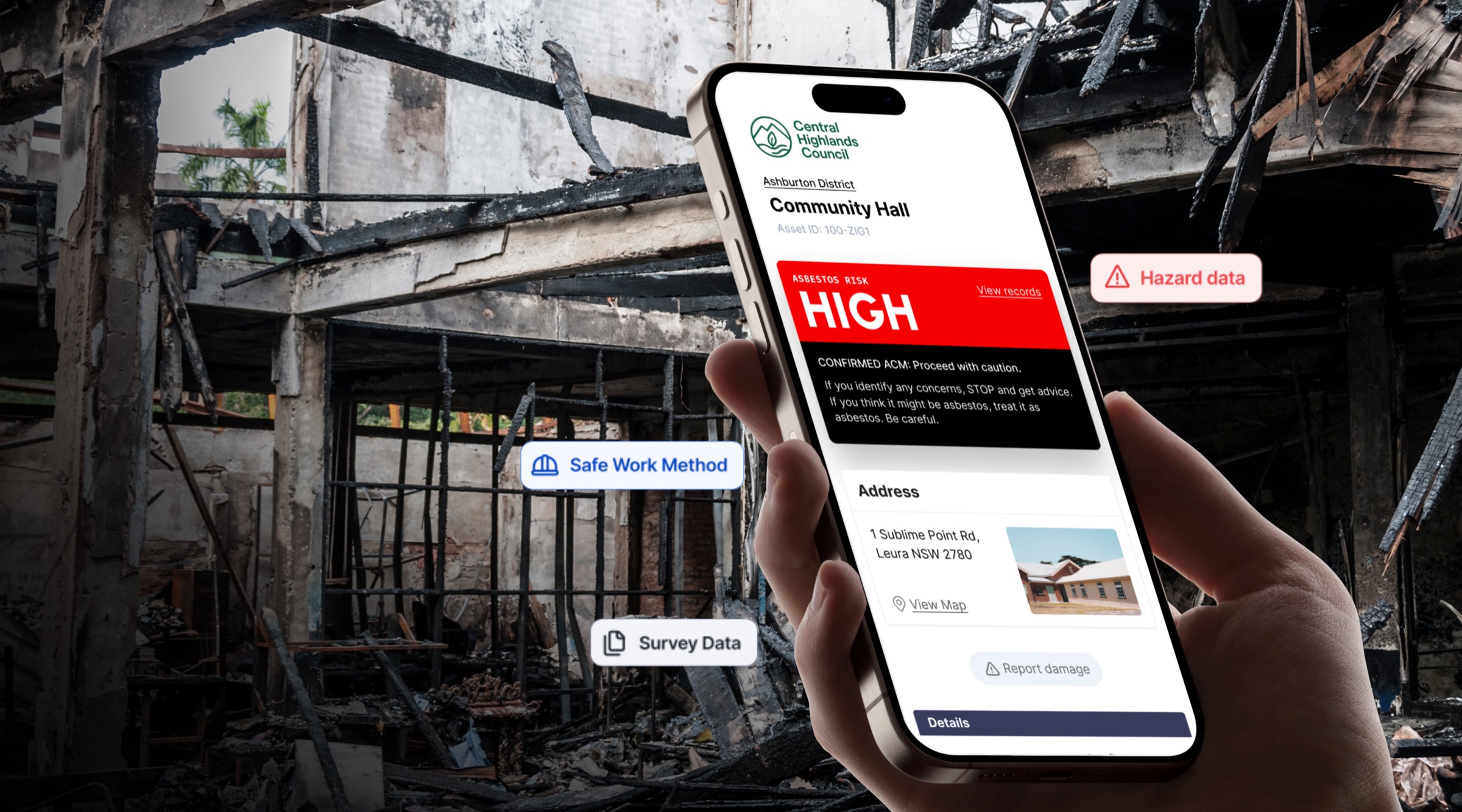
How bushfires expose asbestos risks and why accurate registers matter
As the weather heats up, so does the risk of bushfires, and with it, a less visible hazard that complicates clean-up and recovery long after the flames are extinguished.
Bushfires and the hidden asbestos risk
Many public buildings and community facilities built before 1990 still contain asbestos, with an estimated 6.2 million tonnes remaining in the built environment. During a fire, asbestos-containing materials (ACMs) can crack, break or spall, releasing fibres into the environment. While air monitoring during and after fires shows relatively low asbestos fibre concentrations, materials often remain in debris and ash, posing the highest risk when disturbed during clean-up or demolition.
The challenge
Managing asbestos safely after fires starts with knowing its location and how it has been affected. Fires can destroy not only infrastructure but also paper-based compliance records, leaving asset owners uncertain about what was previously identified. Without accurate and accessible data, responders face delays and exposure risks, making reliable digital asbestos registers essential to safe recovery.
Where asbestos is identified, a comprehensive risk assessment is critical. This includes evaluating the type and condition of ACMs, extent of contamination, and likelihood of disturbance based on site usage and occupancy. These assessments help ensure the right control measures are implemented to minimise exposure during clean-up.
Supporting safe recovery and future resilience
Modern digital asbestos and HAZMAT systems, such as Octfolio, support this by capturing and updating this information live, giving users a consistent view of register data, anywhere, any time. This shared visibility helps authorities coordinate clean-up and recovery safely and efficiently.
Asbestos management after fires is critical to safeguarding communities and strengthening preparedness for future events. Accurate, accessible registers allow responders to identify risks quickly and guide safe, compliant clean-up and recovery. Australia’s asbestos legacy will remain a challenge for decades to come, highlighting the importance of robust asbestos management in disaster recovery and proactive risk reduction.
Ready to strengthen your bushfire recovery response?
Book a demo to see how Octfolio gives responders accurate, accessible asbestos registers when it matters most.
Written by
